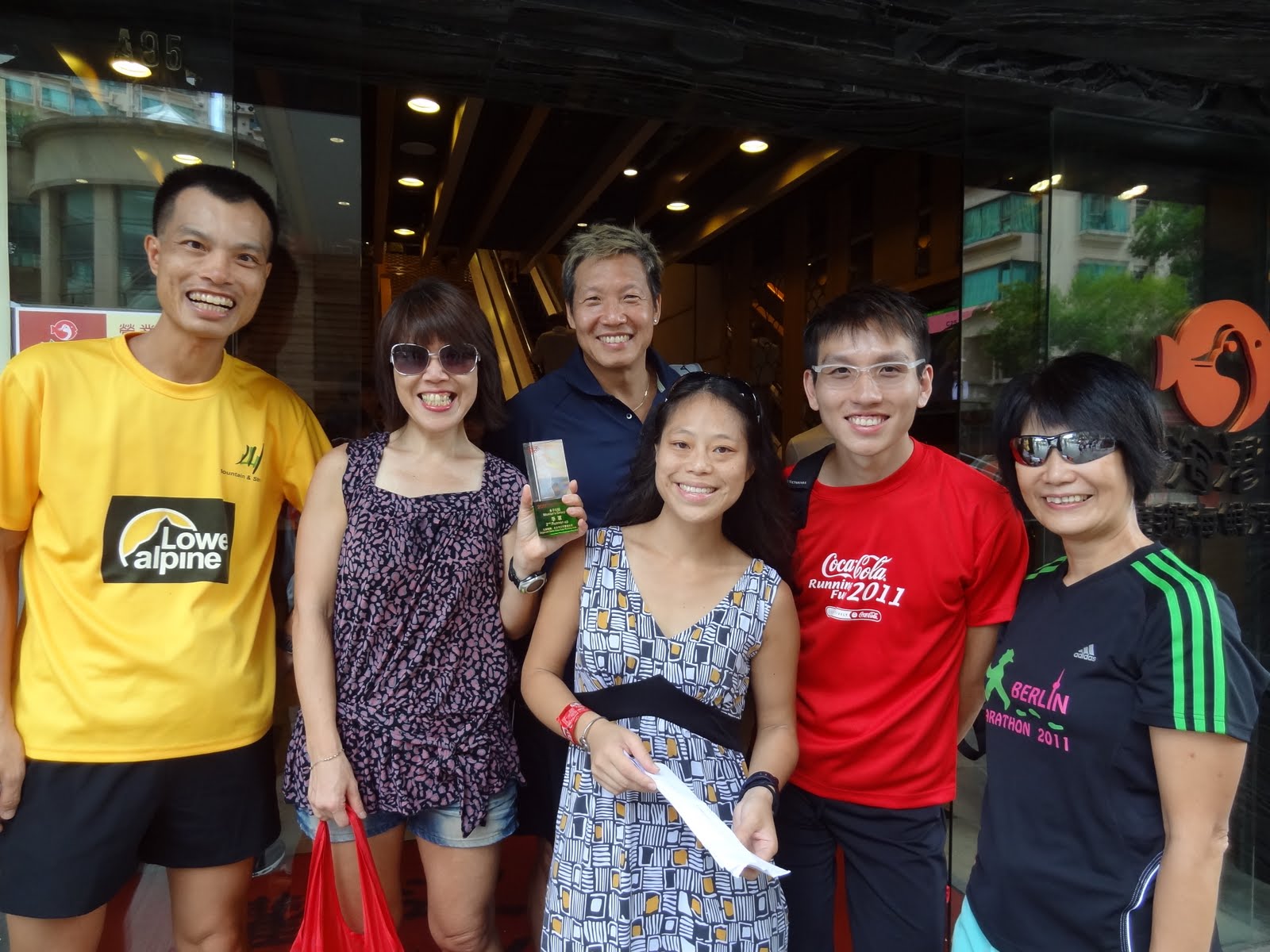
送給這4 個多月陪我跑過笑過哭過的 teammates, 在全年最炎熱的時間練馬拉松,沒有一顆熾熱的心及堅韌的傻勁,實在是很難撐過來。 今晚一行人等會飛往全球最快的賽道之一去測試這數月來訓練的成果,當然比賽是會盡力,但無論結果是啥,各跑手、教練及 support team 之間的友誼也會縛得更緊密了。 各位加油 !!
賽事起點終點都設在烏溪沙青年營 起跑時人太多,路太窄 無法起跑,只有慢 jog 約 7 分 jog 完第 1 K 第 2 至第 7 K 和 SirLi 拍跑 5:50/K 沿途看見只跑了 3K 的紀大人叫我們加油 在7 K 處見 Roy 記上岸叫我們加油 (因他和 Karen 泉哥等是先跑了 7 K 長課來的) 第 8 K 飲水後腳上加勁 遠遠看見 URC 的 Edward 便在最後 1 K 時追過他 轉入球場後更是大步邁向終點
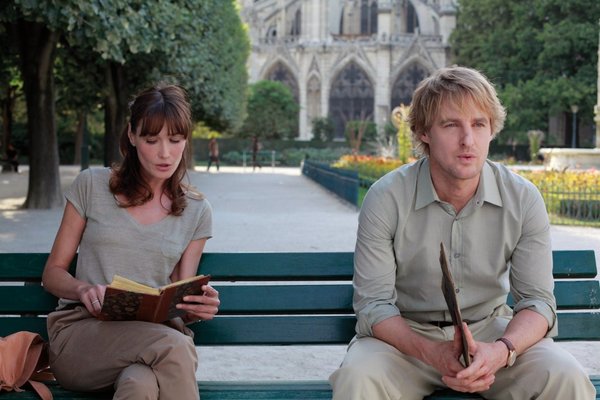
Midnight in Paris Woody Allen 2011 作品 上世紀 20 年代的人、事、物和歌 你不需要太知道片內的作家藝術家畫家等 因 WA 說故事的功力已出神入化 時空交錯在古今的巴黎中 令人思古之情不期然從內心深處湧上來 每一個時代的人都覺得自己若能回到古時的 Golden Age 應該可以比活在當下精彩 此片有 Owen Wilson 及 Corey Stoll 用對白來道出 WA 的夫子之道 還有Rachel McAdams + Marion Cotillard 還還有法國第一夫人 Carla Bruni 客串做 tourist guide 喋喋不休中加上巴黎的夜色還是很好看的 片初約 4 分鐘巴黎各地方的定鏡實在是來年去巴黎的取景之地 每人心目中都有自己的 Golden Age 你的,又是在那年? 片中的各段音樂/歌曲更是難忘 害我在 Soundtrack 及 YT 間遊走了一個下午
「耆英」(老嘢)們聚談,很多時都會慨嘆年輕一代不知「稼穡艱難」,對老一輩隻身南來白手興家的艱苦與奮鬥過程,既無所知亦無動於中。這種情況,其實普世皆然,遠的不說,新加坡「國父」李光耀(1923-)便有此「煩惱」,作為國家領袖,他因而憂心忡忡,生怕年輕一代的新加坡人「把國家的穩定、增長和繁榮視為理所當然」。他擔心他們因此失去了奮發圖強不懈努力的意志,因此發而為文,不少寫於他在本世紀初出版的兩本《李光耀回憶錄—一九二三—一九六五及一九六五—二○○○年》(Memoirs of Lee Kuan Yew)之中;在第二本《回憶錄》的中文版(台北世界書局)序文中,作者特別指出它「收錄的是我和同僚們所面對的難題,以及我們如何想方設法解決這些問題的經驗」。李氏強調:「不論是公共秩序、個人安全或是經濟和社會的進步與繁榮,都不是從天而降,這一切都是一個誠實和有效率的政府專心致志、孜孜不倦地努力所換來的成果!」新加坡從一個只有二百多萬人的毫無天然資源更乏經濟活力的殖民地,獨立後經過數十年的有效管治,成為今天人口近五百萬的亞洲經濟重鎮,長期主政的李光耀當然有許多寶貴經驗可傳諸後輩,《回憶錄》因此彌足珍貴。
可是,近十年來各方面的發展,特別是李顯龍內閣的平均年齡只有五十三歲,李光耀恐怕「坐享其成」的年輕幹部持國可能出偏差,因此在八十五歲的高齡,以「內閣資政」(Minister Mentor,中文譯名似未能確切反映其真正涵意)的身份,於○八年十二月至○九年十月之間,接受該國《海峽時報》七名新聞工作者十六次總共長達三十二小時的訪問(訪問錄影製成DVD,隨書附送;按 李夫人柯玉芝女士二○一○年十月二日病逝後,雖然仍有未了的問題,但李光耀不再見記者,只以電郵簡約回答所問);這些訪問,原先也許只想作「內部參考」,供執政黨人民行動黨幹部及政府官員學習,惟李氏後來慨然答允把之輯成專書,這便是本文要介紹的《新加坡賴以向前發展的硬道理》(Lee Kuan Yew: HARD TRUTHS to Keep Singapore going;下稱《硬道理》)。
「新加坡共識」,據五月二十四日《外交政策》雙月刊的〈李光耀斯坦千秋萬世》(P. Khanna: Lee Kuan Yew-istan Forever)的解釋,第一是「管理國家如經營私人企業」,以新加坡的例子,她倣傚的私企為英荷蜆殼石油,這即是說,該國的政府結構、人才選拔培訓及以物質為獎勵的體制,皆向「蜆殼」取經,結果新加坡公務員薪津與廉潔之高,俱為全球之冠;第二是新加坡福利政策與歐洲福利國不相伯仲,這包括全民醫療保險、低免費的教育制度,同時制訂一系列「方案」,以激勵人民規行矩步(如不准嚼香口膠﹝現在已修訂為不准亂吐香口膠﹞)及專心致志工作等,等於讓人民成為新加坡公司的「持份者」(stakeholder),即新加坡屬於全體新加坡人。李光耀這種「治國理念」,受他在倫敦經濟學院(LSE)的教授、英國著名的經濟學家(不肯從政的工黨理論家)拉斯基(H. Laski, 1893-1950)影響甚深(頁一八七)。新加坡的現況看起來有點像社會學家貝爾和狄—沙立特在快將出版的《城市的精神》(D. A. Bell和A de-Shalit):《The Spirit of Cities》)中所揭示的「市民主義」(Civicism,公德社會)—對自己生於斯長於斯的城市感自豪(這與「民族主義」有一線之別,後者極易發展出排他性和外侵性的大國沙文主義)。「市民主義」也許會成為二十一世紀最流行最受歡迎的「主義」!
李光耀對計劃經濟的成效,大有保留,何以見得?原來在談及讀書時,他說:「你若對經濟學有興趣,應該讀海耶克」;李氏沒有具體地說出哪本書,惟顯然是指「眾所周知」的《到奴役之路》(The Road to Serfdom),因為李光耀接著這麼說:「如果你實行計劃經濟,你將以失敗收場!」(頁三八四)。李氏雖然沒有指明哪本書亦沒說「你」是誰,但本報的讀者沒有不知道他何所指。
被問及新加坡人應「讀什麼書」時,經濟學書籍李光耀推介《到奴役之路》(如上述,這是筆者的揣測;雖然此書只是海耶克博大精深經濟學說的「濃縮通俗版」);讀者也許想知道他喜歡什麼他類書籍?文學他推薦莎士比亞;政治則是肯尼地(故美國總統)的《當仁不讓》(Profiles in Courage);美國「今上」奧巴馬的自傳亦值得一讀,讀其書同時可觀照他的作為,顯得特別有意思。在記者追問下,李光耀承認「大體而言」他喜讀福爾摩斯系列的偵探小說,閒讀時亦讀《唐吉訶德》(Don Quixote),「但我不會向磨坊的風車宣戰,現實世界我有太多人事要克服」(I got mortal foes to fight against;頁三八三—四)。
順便一提,李光耀說他年輕時鍾意的喜劇演員為丹尼基,「他能歌善舞且會演」;對夏裡遜和柯德莉夏萍主演的《茶花女》,他亦留下美好印象(他記得的是Pygmalion而非My Fair Lady)。李氏又說他曾看《亂世佳人》(Gone with the Wind),但久已不看荷里活電影了。
在國際間的「知華派」中,筆者以為李光耀是此中的翹楚,他有中國人血統、從幼受傳統西方教育、盛年在政治上有成後苦學中文,加以新加坡基本上是華人社會,而他又一早與中國政要接觸並多次訪問大陸(他一早與中國交好同時發展與印度的關係,藉以平衡對中國的依賴),以他的聰明才智,其對中國的認識,在當今非華人學者及中國問題專家中,李光耀堪稱首屈一指。被問及在中國的軟實力大增的情形下,作為一位華裔,他會否因此「北望神州」、事事向中國「看齊」?李氏的答案是否定的,他說,中國人或未富先驕或財大氣粗(直譯是「他們愈成功愈看不起人之外,還會以高高在上的傲慢態度對待你」﹝…treat you with condescension﹞,頁三三○),換句話說,已崛起的中國人,不易相處;這當然是亞洲「諸小」不希望美國撤出亞洲的原因之一。
李光耀高度讚賞該國廣告創作者Lim Sau Hoong(林少芬),據www.red-dot.sg的資料,林女士獲新加坡國立大學文學院榮譽學位、教育學院文憑兼修音樂,歷任廣告公司創意總監,二○○○年創立10AM Communications;二○○八年任北京奧運開幕儀式設計籌委會視覺形象顧問、二○一○年上海世博新加坡館籌委會諮詢主席;林女士獲五百多項國際大獎,其中國銀行系列廣告大受歡迎,久播不衰的立邦漆、新力(索尼)愛立信等廣告皆出自她的手筆;她的傑作還包括中國中央電視台(CCTV)形象廣告,其創作的「心有多大舞台就有多大」,被中國觀眾選為「記憶度最高的標語」。她在中國很成功,以至中國顧客要她在北京成立辦事處,為她婉拒,她寧根留新加坡,中國顧客需要她幫忙,如果條件合適,「電召即到」。這種做法,李光耀非常欣賞(李氏曾公開表揚)。李氏引述她的分析:「一旦在內地開分支,你便成為他們一分子;他們對你便有呼之即來揮之則去的期待,結果可能不歡而散。」李光耀說林女士精明能幹,這樣做才不失新加坡人身份。李氏接著有所發揮,他說,你在中國有辦事處,你的中國顧客會一視同仁地當你是內地人,會吩咐你「馬上做,快點」(ma shang zuo, kuai dian),但許多事是急不來的……。李氏的談話中夾雜不少普通話,如bu cheng ba(不稱霸)如shi san yi(十三億)等,讀起來特別生動有趣。
李光耀的求學經驗,大有可以借鏡的地方。他六歲順從外祖母的選擇,進入以華語普通話授課的ChoonGuan小學(《李光耀回憶錄》的〈紀事年譜〉略去小學的「經曆」),他家里說英語和馬來語,對華語因此甚難適應,加上「背死書」的方法李光耀不能接受,遂說服母親讓他轉讀英文小學TelokKurau English School;小學畢業後考上萊佛士書院繼而萊佛士學院(RafflesInstitution)就讀;一九四二至四五年新加坡淪陷的日治時期,李光耀失學、半失業—他加入「書友」創辦的膠水工場(以木薯粉制成文具膠水),在那里認識了未來太太柯玉芝……。勝利後二十三歲的李光耀負笈英國,先進LSE,「不服水土」,轉劍橋大學FitzWilliamHouse(書院)。李光耀的英語當然沒問題,若刻意仿效,行為舉止亦可以媲美英國紳士,但他意識到僅有語言相同而價值觀互異,你始終無法成為「他們」的一員;而由於不通中文,他因此無法接觸遑論理解中國經籍的微言大義,他在家中所感染的只是儒學中的「庸俗膚淺文化」(lowculture)。他於三十二歲(是年他當選議員並成為僅得三議席的反對黨領袖)開始苦讀中文,才慢慢了解中國文化的精深博大。對中國文化肅然起敬,令李光耀要他的子女進中文小學,結果在求學時期,中文成為他們的母語,接著才是英文和馬來語;由於工作上多用英文少用中文,現在他們的第一語文是英語。
This is a prepared text of the Commencement address delivered by Steve Jobs, CEO of Apple Computer and of Pixar Animation Studios, on June 12, 2005.
I am honored to be with you today at your commencement from one of the finest universities in the world. I never graduated from college. Truth be told, this is the closest I've ever gotten to a college graduation. Today I want to tell you three stories from my life. That's it. No big deal. Just three stories.
The first story is about connecting the dots.
I dropped out of Reed College after the first 6 months, but then stayed around as a drop-in for another 18 months or so before I really quit. So why did I drop out?
It started before I was born. My biological mother was a young, unwed college graduate student, and she decided to put me up for adoption. She felt very strongly that I should be adopted by college graduates, so everything was all set for me to be adopted at birth by a lawyer and his wife. Except that when I popped out they decided at the last minute that they really wanted a girl. So my parents, who were on a waiting list, got a call in the middle of the night asking: "We have an unexpected baby boy; do you want him?" They said: "Of course." My biological mother later found out that my mother had never graduated from college and that my father had never graduated from high school. She refused to sign the final adoption papers. She only relented a few months later when my parents promised that I would someday go to college.
And 17 years later I did go to college. But I naively chose a college that was almost as expensive as Stanford, and all of my working-class parents' savings were being spent on my college tuition. After six months, I couldn't see the value in it. I had no idea what I wanted to do with my life and no idea how college was going to help me figure it out. And here I was spending all of the money my parents had saved their entire life. So I decided to drop out and trust that it would all work out OK. It was pretty scary at the time, but looking back it was one of the best decisions I ever made. The minute I dropped out I could stop taking the required classes that didn't interest me, and begin dropping in on the ones that looked interesting.
It wasn't all romantic. I didn't have a dorm room, so I slept on the floor in friends' rooms, I returned coke bottles for the 5¢ deposits to buy food with, and I would walk the 7 miles across town every Sunday night to get one good meal a week at the Hare Krishna temple. I loved it. And much of what I stumbled into by following my curiosity and intuition turned out to be priceless later on. Let me give you one example:
Reed College at that time offered perhaps the best calligraphy instruction in the country. Throughout the campus every poster, every label on every drawer, was beautifully hand calligraphed. Because I had dropped out and didn't have to take the normal classes, I decided to take a calligraphy class to learn how to do this. I learned about serif and san serif typefaces, about varying the amount of space between different letter combinations, about what makes great typography great. It was beautiful, historical, artistically subtle in a way that science can't capture, and I found it fascinating.
None of this had even a hope of any practical application in my life. But ten years later, when we were designing the first Macintosh computer, it all came back to me. And we designed it all into the Mac. It was the first computer with beautiful typography. If I had never dropped in on that single course in college, the Mac would have never had multiple typefaces or proportionally spaced fonts. And since Windows just copied the Mac, it's likely that no personal computer would have them. If I had never dropped out, I would have never dropped in on this calligraphy class, and personal computers might not have the wonderful typography that they do. Of course it was impossible to connect the dots looking forward when I was in college. But it was very, very clear looking backwards ten years later.
Again, you can't connect the dots looking forward; you can only connect them looking backwards. So you have to trust that the dots will somehow connect in your future. You have to trust in something — your gut, destiny, life, karma, whatever. This approach has never let me down, and it has made all the difference in my life.
My second story is about love and loss.
I was lucky — I found what I loved to do early in life. Woz and I started Apple in my parents garage when I was 20. We worked hard, and in 10 years Apple had grown from just the two of us in a garage into a $2 billion company with over 4000 employees. We had just released our finest creation — the Macintosh — a year earlier, and I had just turned 30. And then I got fired. How can you get fired from a company you started? Well, as Apple grew we hired someone who I thought was very talented to run the company with me, and for the first year or so things went well. But then our visions of the future began to diverge and eventually we had a falling out. When we did, our Board of Directors sided with him. So at 30 I was out. And very publicly out. What had been the focus of my entire adult life was gone, and it was devastating.
I really didn't know what to do for a few months. I felt that I had let the previous generation of entrepreneurs down - that I had dropped the baton as it was being passed to me. I met with David Packard and Bob Noyce and tried to apologize for screwing up so badly. I was a very public failure, and I even thought about running away from the valley. But something slowly began to dawn on me — I still loved what I did. The turn of events at Apple had not changed that one bit. I had been rejected, but I was still in love. And so I decided to start over.
I didn't see it then, but it turned out that getting fired from Apple was the best thing that could have ever happened to me. The heaviness of being successful was replaced by the lightness of being a beginner again, less sure about everything. It freed me to enter one of the most creative periods of my life.
During the next five years, I started a company named NeXT, another company named Pixar, and fell in love with an amazing woman who would become my wife. Pixar went on to create the worlds first computer animated feature film, Toy Story, and is now the most successful animation studio in the world. In a remarkable turn of events, Apple bought NeXT, I returned to Apple, and the technology we developed at NeXT is at the heart of Apple's current renaissance. And Laurene and I have a wonderful family together.
I'm pretty sure none of this would have happened if I hadn't been fired from Apple. It was awful tasting medicine, but I guess the patient needed it. Sometimes life hits you in the head with a brick. Don't lose faith. I'm convinced that the only thing that kept me going was that I loved what I did. You've got to find what you love. And that is as true for your work as it is for your lovers. Your work is going to fill a large part of your life, and the only way to be truly satisfied is to do what you believe is great work. And the only way to do great work is to love what you do. If you haven't found it yet, keep looking. Don't settle. As with all matters of the heart, you'll know when you find it. And, like any great relationship, it just gets better and better as the years roll on. So keep looking until you find it. Don't settle.
My third story is about death.
When I was 17, I read a quote that went something like: "If you live each day as if it was your last, someday you'll most certainly be right." It made an impression on me, and since then, for the past 33 years, I have looked in the mirror every morning and asked myself: "If today were the last day of my life, would I want to do what I am about to do today?" And whenever the answer has been "No" for too many days in a row, I know I need to change something.
Remembering that I'll be dead soon is the most important tool I've ever encountered to help me make the big choices in life. Because almost everything — all external expectations, all pride, all fear of embarrassment or failure - these things just fall away in the face of death, leaving only what is truly important. Remembering that you are going to die is the best way I know to avoid the trap of thinking you have something to lose. You are already naked. There is no reason not to follow your heart.
About a year ago I was diagnosed with cancer. I had a scan at 7:30 in the morning, and it clearly showed a tumor on my pancreas. I didn't even know what a pancreas was. The doctors told me this was almost certainly a type of cancer that is incurable, and that I should expect to live no longer than three to six months. My doctor advised me to go home and get my affairs in order, which is doctor's code for prepare to die. It means to try to tell your kids everything you thought you'd have the next 10 years to tell them in just a few months. It means to make sure everything is buttoned up so that it will be as easy as possible for your family. It means to say your goodbyes.
I lived with that diagnosis all day. Later that evening I had a biopsy, where they stuck an endoscope down my throat, through my stomach and into my intestines, put a needle into my pancreas and got a few cells from the tumor. I was sedated, but my wife, who was there, told me that when they viewed the cells under a microscope the doctors started crying because it turned out to be a very rare form of pancreatic cancer that is curable with surgery. I had the surgery and I'm fine now.
This was the closest I've been to facing death, and I hope it's the closest I get for a few more decades. Having lived through it, I can now say this to you with a bit more certainty than when death was a useful but purely intellectual concept:
No one wants to die. Even people who want to go to heaven don't want to die to get there. And yet death is the destination we all share. No one has ever escaped it. And that is as it should be, because Death is very likely the single best invention of Life. It is Life's change agent. It clears out the old to make way for the new. Right now the new is you, but someday not too long from now, you will gradually become the old and be cleared away. Sorry to be so dramatic, but it is quite true.
Your time is limited, so don't waste it living someone else's life. Don't be trapped by dogma — which is living with the results of other people's thinking. Don't let the noise of others' opinions drown out your own inner voice. And most important, have the courage to follow your heart and intuition. They somehow already know what you truly want to become. Everything else is secondary.
When I was young, there was an amazing publication called The Whole Earth Catalog, which was one of the bibles of my generation. It was created by a fellow named Stewart Brand not far from here in Menlo Park, and he brought it to life with his poetic touch. This was in the late 1960's, before personal computers and desktop publishing, so it was all made with typewriters, scissors, and polaroid cameras. It was sort of like Google in paperback form, 35 years before Google came along: it was idealistic, and overflowing with neat tools and great notions.
Stewart and his team put out several issues of The Whole Earth Catalog, and then when it had run its course, they put out a final issue. It was the mid-1970s, and I was your age. On the back cover of their final issue was a photograph of an early morning country road, the kind you might find yourself hitchhiking on if you were so adventurous. Beneath it were the words: "Stay Hungry. Stay Foolish." It was their farewell message as they signed off. Stay Hungry. Stay Foolish. And I have always wished that for myself. And now, as you graduate to begin anew, I wish that for you.